
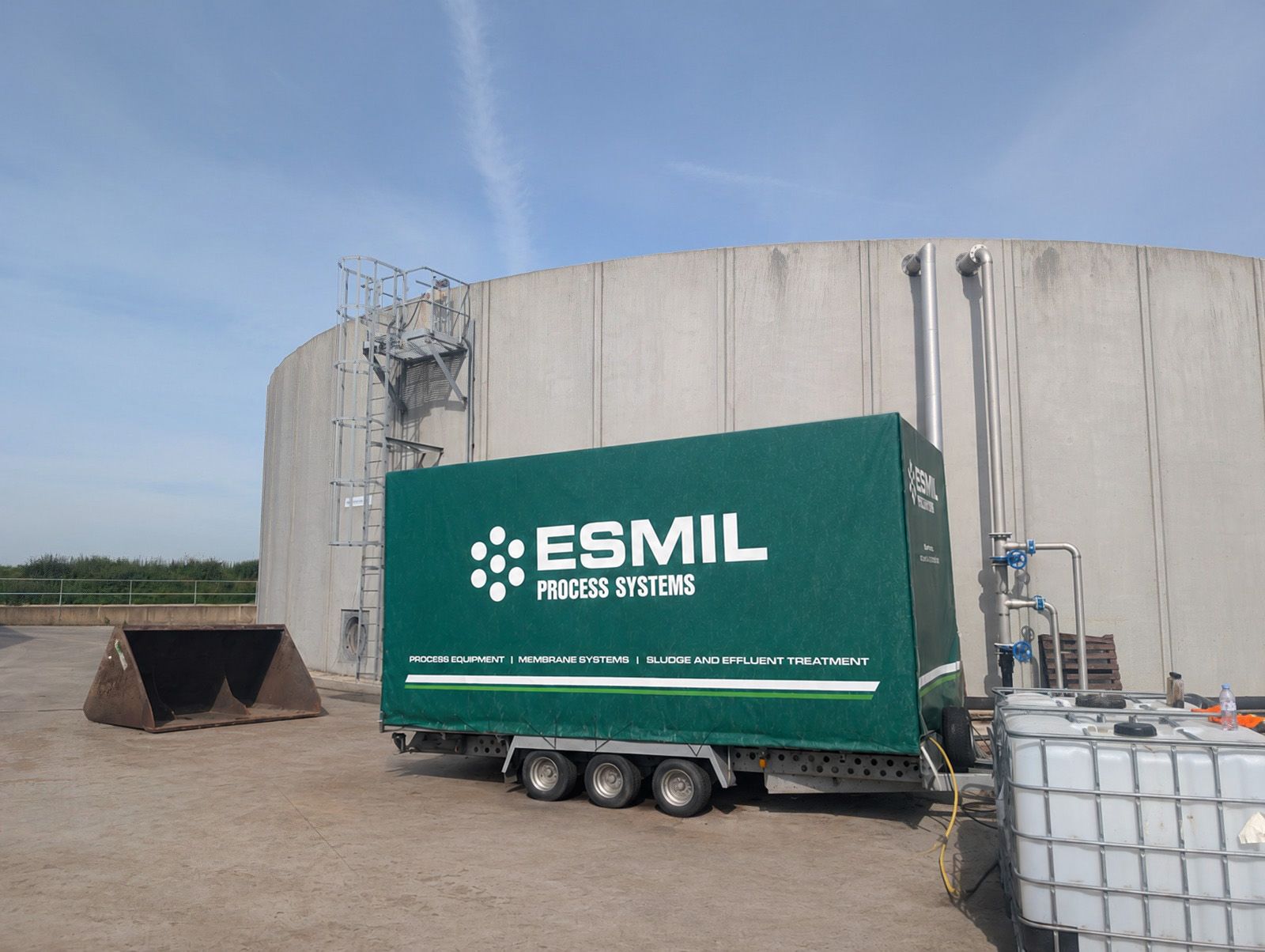
Анаеробне зброджування дає змогу перетворювати біорозкладні органічні матеріали, зокрема гній тварин і рослинну сировину, на біогаз – відновлюване джерело енергії. Побічним продуктом цього процесу є дигестат – багатий на поживні речовини матеріал, який після відповідної обробки може стати цінним джерелом вторинних ресурсів.
Як забезпечити ефективну обробку дигестату та водночас максимально відновити цінні компоненти, що містяться в ньому?
Щоб відповісти на це запитання, фахівці ESMIL провели серію випробувань із використанням мультидискового шнекового зневоднювача MDQ та пілотної мембранної установки, до складу якої входили системи суперфільтрації (SF) і зворотного осмосу (RO).
Демонстрація комплексної системи обробки дигестату ESMIL
Команда ESMIL продемонструвала роботу комплексної системи, що поєднує мультидисковий шнековий зневоднювач ESMIL–Tsurumi MDQ із мембранною установкою на основі технологій суперфільтрації (SF) та зворотного осмосу (RO).
Під час випробувань використовувався дигестат, отриманий у процесі анаеробного зброджування гною великої рогатої худоби та рослинної сировини.
Випробування підтвердили ефективність комплексного технологічного рішення в реальних умовах експлуатації та викликали значний інтерес серед представників підприємств, що працюють у сфері анаеробного зброджування.
За результатами демонстрації компанію ESMIL запросили провести лабораторні випробування дигестату, отриманого на іншому підприємстві. У цьому випадку сировиною слугували курячий послід і кукурудза.
Обробка дигестату з курячого посліду та кукурудзи
Дигестат мав вміст сухих речовин 7,3–7,5 % і характеризувався високою в’язкістю, що суттєво ускладнювало як реагентну обробку, так і подальше зневоднення.
Лабораторні випробування, проведені фахівцями ESMIL, показали, що для формування стабільних пластівців і ефективного розділення твердої та рідкої фаз необхідно було попередньо розбавити дигестат, після чого підібрати оптимальне дозування хлориду заліза та катіонного полімеру.
На основі отриманих результатів було розроблено оптимальну схему реагентної обробки, яку згодом підтвердили під час пілотних випробувань із використанням мультидискового шнекового зневоднювача ESMIL–Tsurumi MDQ.
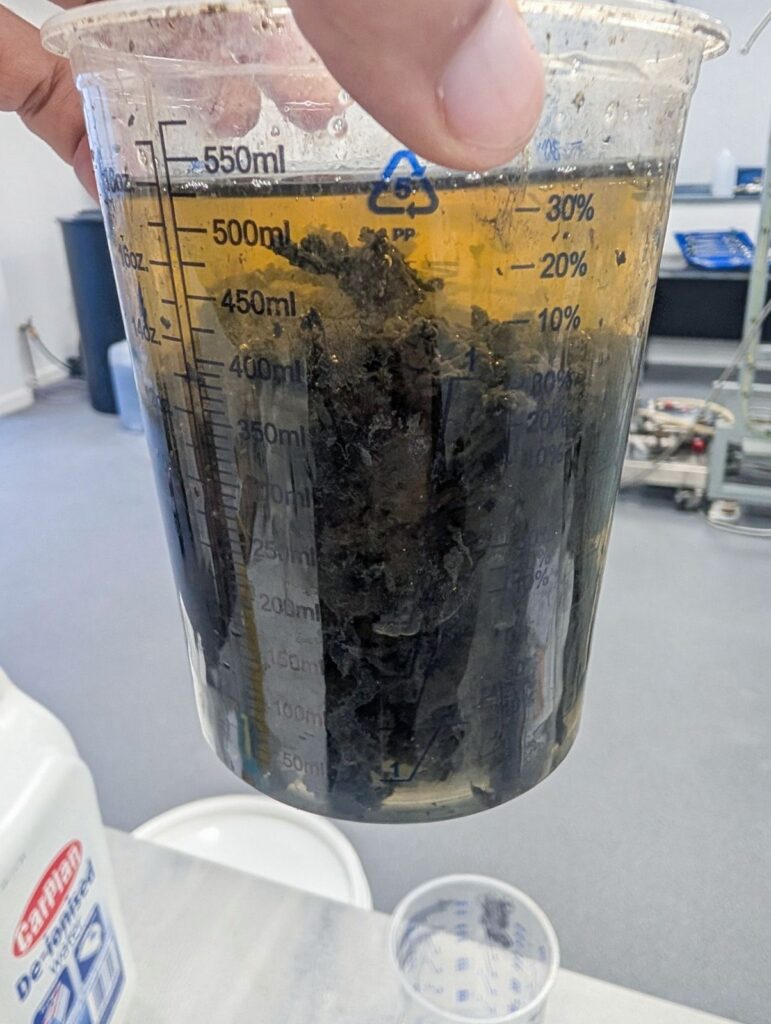
Digestate dewatering with the ESMIL-Tsurumi MDQ Screw Press
The laboratory results established the optimum chemical conditioning strategy and provided the basis for the next stage: pilot trials conducted under full-scale operating conditions.
A pilot MDQ-201 Multi-Disc Screw Press was installed on site to validate the proposed process and optimise operating parameters.
The trials confirmed excellent dewatering performance, achieving:
- 22.1% dry solids content in the dewatered cake
- 0.1–0.2% dry solids content in the filtrate
The pilot testing also demonstrated that chemical consumption could be significantly reduced compared with the dosages established during laboratory testing.
Filtrate polishing with the ESMIL membrane system
The filtrate produced during dewatering was subsequently treated using an ESMIL membrane system incorporating Superfiltration (SF) and Reverse Osmosis (RO).
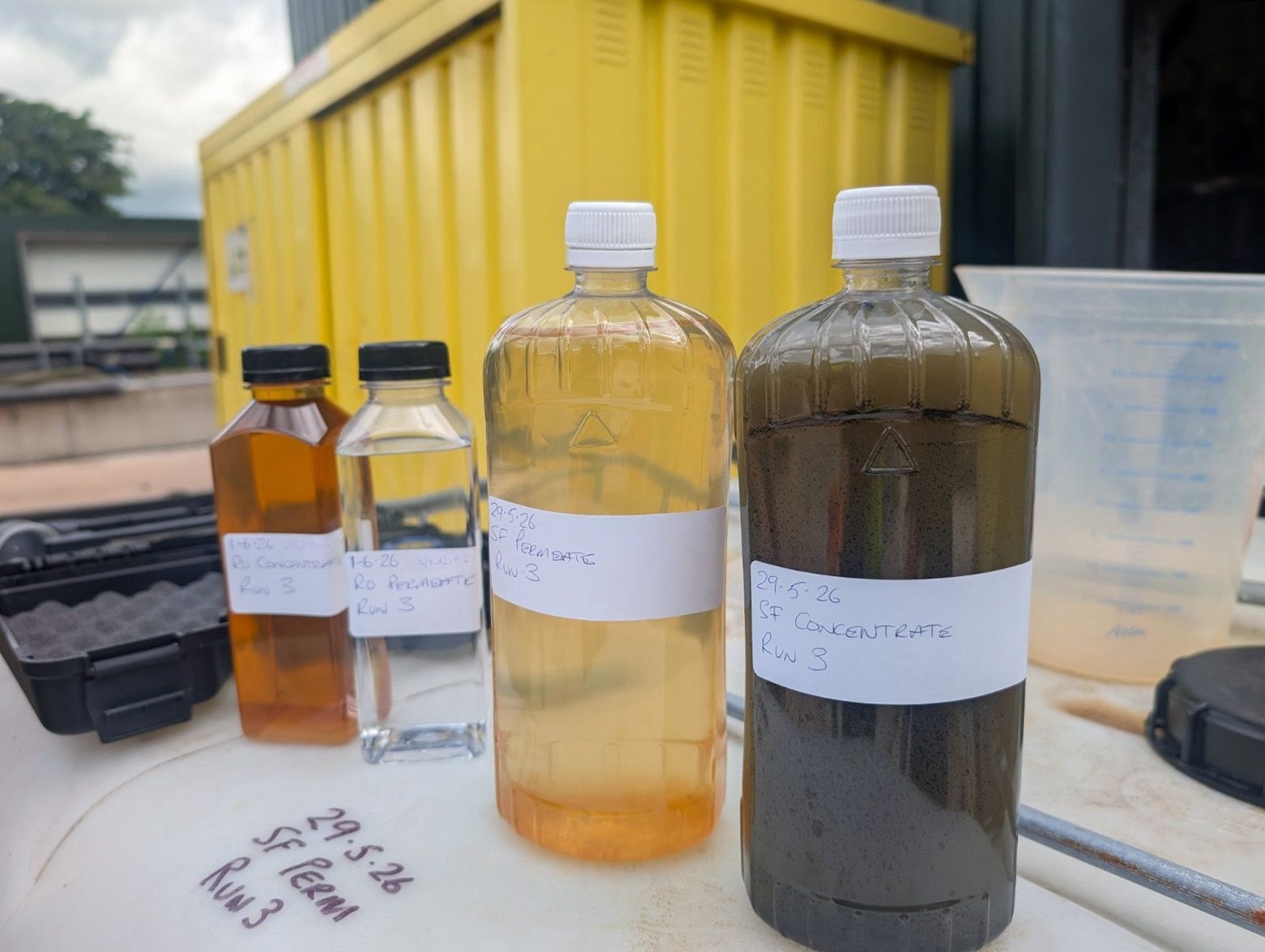
The membrane process separated the filtrate into two valuable streams:
- a nutrient-rich concentrate suitable for use as a fertiliser product
- treated water suitable for reuse within the process
This approach not only reduces waste generation but also maximises the recovery of valuable resources contained in the digestate.
From pilot trials to a full-scale installation
Following completion of the pilot testing, the MDQ Multi-Disc Screw Press remained on site, allowing the customer to continue operating the system under real process conditions.
During this period, the press operated reliably and consistently, confirming the robustness of the process and giving the customer greater confidence in proceeding with a full-scale installation.
The results exceeded the original project expectations and provided a solid foundation for designing a full-scale system tailored to the customer’s specific operational requirements.
Benefits of the integrated digestate treatment system
The trials demonstrated that combining digestate dewatering with membrane treatment not only improves digestate management but also reduces the operating costs of an anaerobic digestion plant.
Reusing the treated water, for example, for polymer make-up or digestate dilution, reduces fresh water consumption. At the same time, reducing the volume of dewatered digestate lowers transport, storage and disposal costs.
An additional benefit is the recovery of nutrients concentrated in the concentrate stream, which can be used as a valuable fertilizer product.
For AD plant operators, this means lower operating costs, more efficient resource utilisation and increased value from anaerobic digestion by-products.
At ESMIL, we design and deliver complete digestate treatment systems, combining expertise in chemical conditioning, dewatering and membrane processes. By tailoring each solution to the customer’s specific requirements, we help maximise plant performance, reduce operating costs and unlock the full value of anaerobic digestion by-products.